

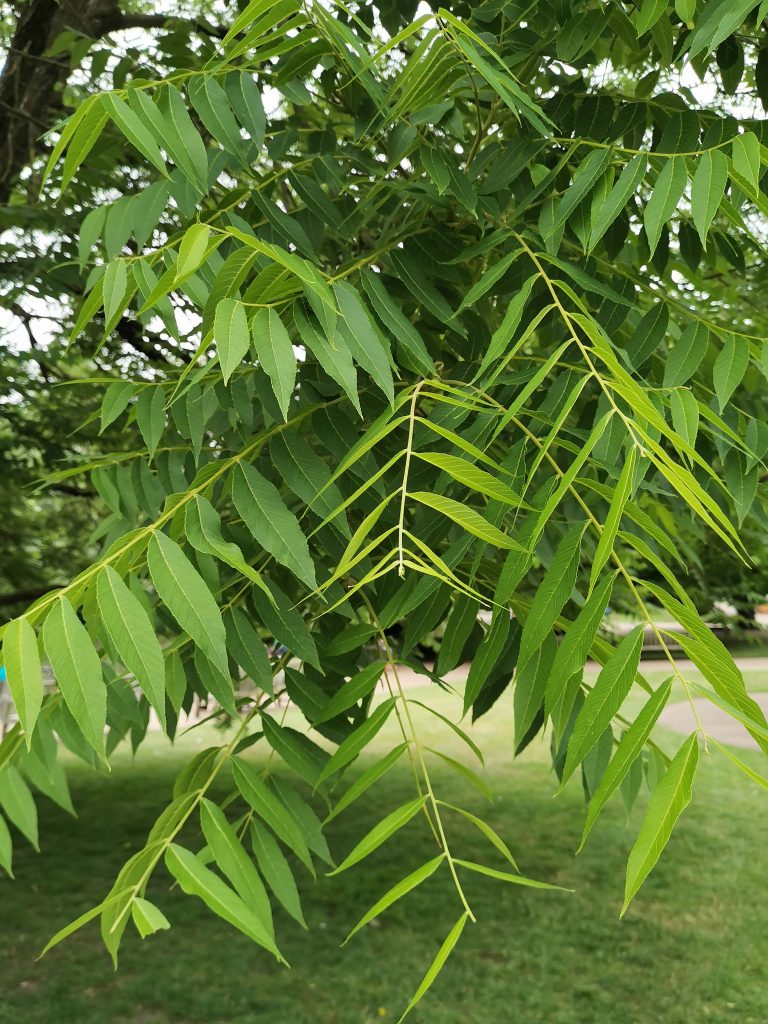


The black walnut has great medicinal value and is very ornamental. It’s also a favourite with squirrels who eat the green plum like fruits. It flowers in May to early june and has long catkins that droop from the branches. It’s native to North America and was introduced to Europe in the late 1600’s.
“There are many medicinal uses for every part of the tree, including as a mosquito repellent, a dermatological aid, an anti-diarrhoeal medication, a laxative and treatment for parasitic worms. It has been used to relieve the symptoms of fever, kidney ailments, gastrointestinal disturbances, ulcers, toothache, syphilis and snake bites.
The fruit husks of the black walnut contain juglone – a compound that inhibits bacterial and fungal growth and may be valuable in controlling infections in humans. It is also being tested for its cancer-fighting properties.
Its timber is attractive and valuable. It is strong and durable, and the heartwood has a mottled effect.
The seeds give out a dark-coloured dye which is still used in crafts.” (Woodland Trust)