
Trees in the Jephson Gardens
Tulip Tree.


The tulip tree (liriodendron tulipifera or commonly canary whitewood) has rounded leaves that are quite unusual. They turn buttery yellow in the autumn. The tree with the flowers is opposite the lake, near the arbour.
It likes lime free soil in sun or partial shade and reaches up to 12 metres
Folklore: “When Adam and Eve were marching out of Eden having been banished, Eve spitefully tugged at the leaf of the tulip tree. In so doing she pulled off the central lobe, triggering all future tulip trees to grow without them” (http://www.plant-lore.com/tulip-tree/)
It has a history of use as a tonic and treatments for fever in the Southern Appalachians. It has also been used to treat gangrene and inflammation by native Americans.
Gleditsia Triacanthos, Sunburst.


This is a beautiful golden leaved tree with frondy like foliage, and is known as the Honey Locust. It has a rounded and spreading form and is a small deciduous tree. It has inconspicuous flowers followed by large flattened seed pods.
It can be a nuisance because it suckers – constantly trimmed it could make a good hedge.
Folklore and unproven medicinal history: (Do NOT try, do NOT eat). The pods are a folk remedy for dyspepsia and measles among the Cherokee Indians. A tea made from the bark is used to treat whooping cough. Delaware Indians used the bark for blood disorders and coughs, the Fox Indians for colds, fevers, measles and smallpox. A potable alcohol can be made by fermenting the pulp, and the seeds have been roasted and used as a coffee substitute. (But you’d have to be fairly desperate).
Ginkgo Biloba.


Ginkgo Biloba (mostly known as just ginkgo), is also called the maidenhair tree. It’s been found in fossils dating back 270 million years and is native to China. It’s widely cultivated and has incredibly attractive leaves! It can reach over 130 feet tall, so is not usually found in gardens. You can buy health supplements made from the leaves for bladder infections and dementia. (Do NOT try at home!)
The one pictured above is near the Willes Road, and is a relatively rare female one; they apparently have an awful smell when they flower so are not popular!
Paper bark maple, Acer griseum.


This tree was introduced from China at the turn of the century by Ernest Wilson, a well known plant hunter. He came from Chipping Campden where there is a garden full of the plants he introduced to the country – free entry.
It’s known for it’s gorgeous brown or cinnamon bark which flakes off like paper. It’s quite small so would make a reasonable sized garden tree.(Gets to about 12 metres high) It’s leaves are different from usual maples in that they only have 3 leaflets and are not like the usual palmate ones. It has small flowers and turns red and gold in autumn.
Caucasian wingnut, Pteroccarya fraxinifolia

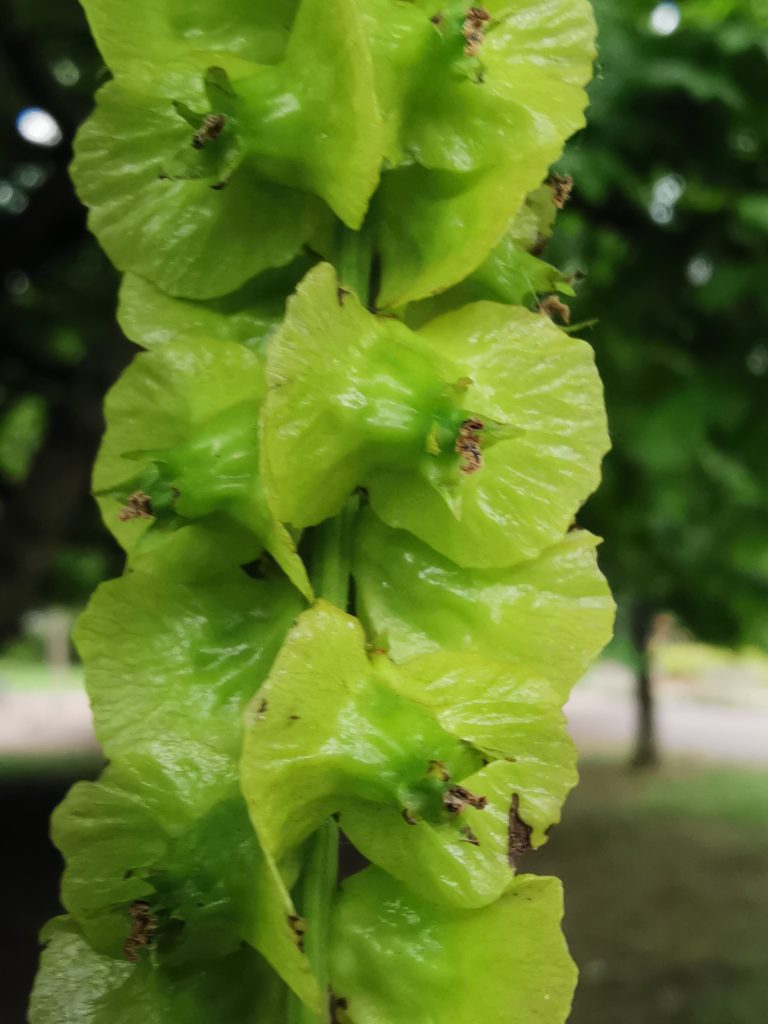


This is a huge tree by the lake whose branches hang down over the water, providing a shady space like a tent for children to play under. It’s said to be the biggest in Warwickshire! It belongs to the walnut family.
It was introduced into the UK sometime after 1800, and is a native of the Caucasian region Armenia, Azerbaijan, Georgia, Iran, Russia, Ukraine and Turkey.
The male flowers form thick catkins about 10 cm (3.9 in) long and is yellow – greenish. The female flowers are slightly longer.
Fagus sylvatica ‘Pendula


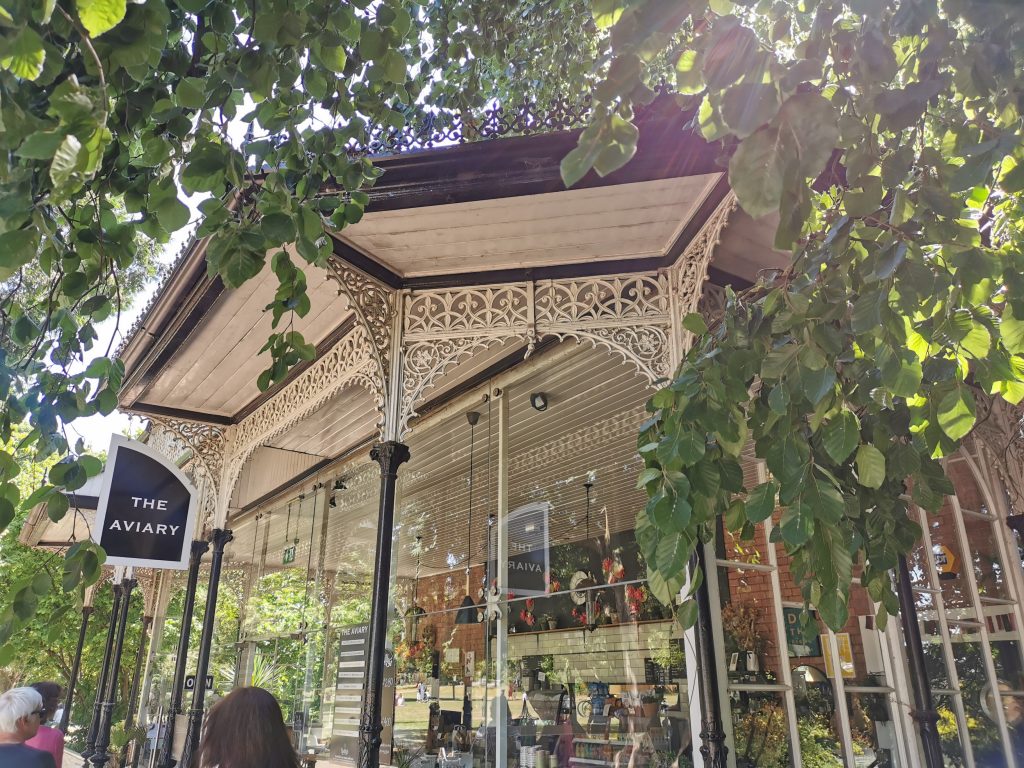
Isn’t this a lovely shady place to wait for a coffee whilst social distancing in the sunshine?
The “Walks around Jephson Gardens” leaflet doesn’t mention this large weeping tree just outside the cafe, but you can identify it as a beech from the leaves which are rounded and have a wavy edge and distinctive vein markings. The buds also help as they stick out at quite an angle from the branches and are quite firm. Weeping Beeches were introduced in the 1830s, and were a great favourite of the Victorian era.
Lawson Cypress – Chamaecyparis lawsoniana.


Black Walnut -Juglans nigra

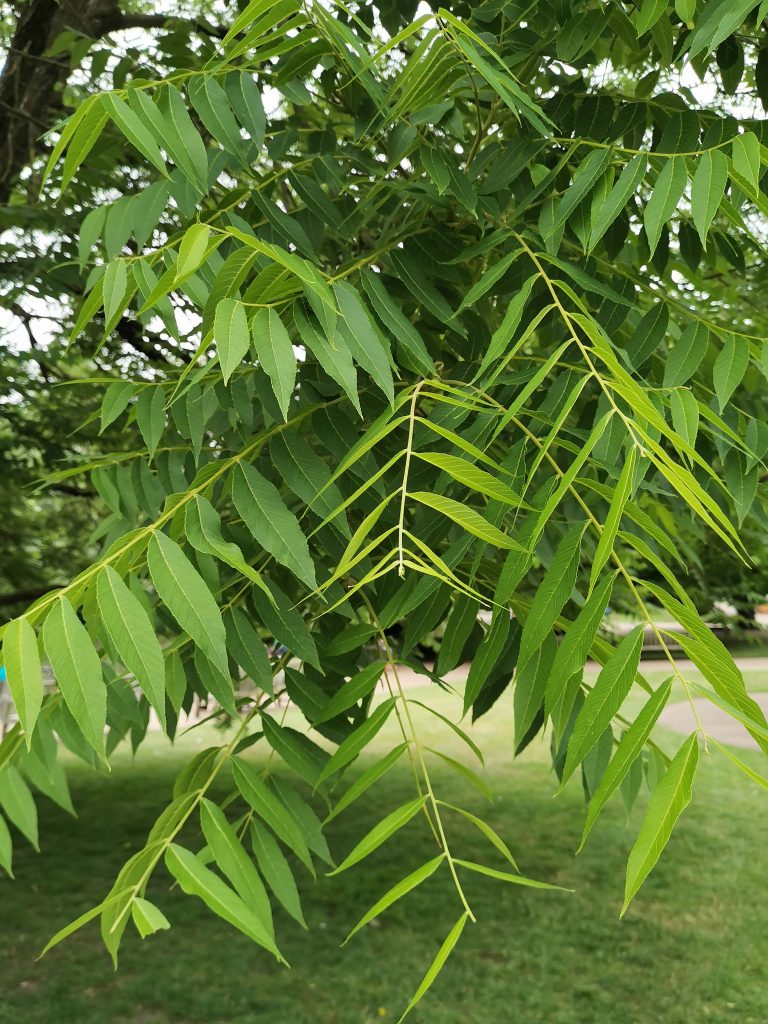


The black walnut has great medicinal value and is very ornamental. It’s also a favourite with squirrels who eat the green plum like fruits. It flowers in May to early june and has long catkins that droop from the branches. It’s native to North America and was introduced to Europe in the late 1600’s.
“There are many medicinal uses for every part of the tree, including as a mosquito repellent, a dermatological aid, an anti-diarrhoeal medication, a laxative and treatment for parasitic worms. It has been used to relieve the symptoms of fever, kidney ailments, gastrointestinal disturbances, ulcers, toothache, syphilis and snake bites.
The fruit husks of the black walnut contain juglone – a compound that inhibits bacterial and fungal growth and may be valuable in controlling infections in humans. It is also being tested for its cancer-fighting properties.
Its timber is attractive and valuable. It is strong and durable, and the heartwood has a mottled effect.
The seeds give out a dark-coloured dye which is still used in crafts.” (Woodland Trust)
Golden Bean Tree – Catalpa bignonoides
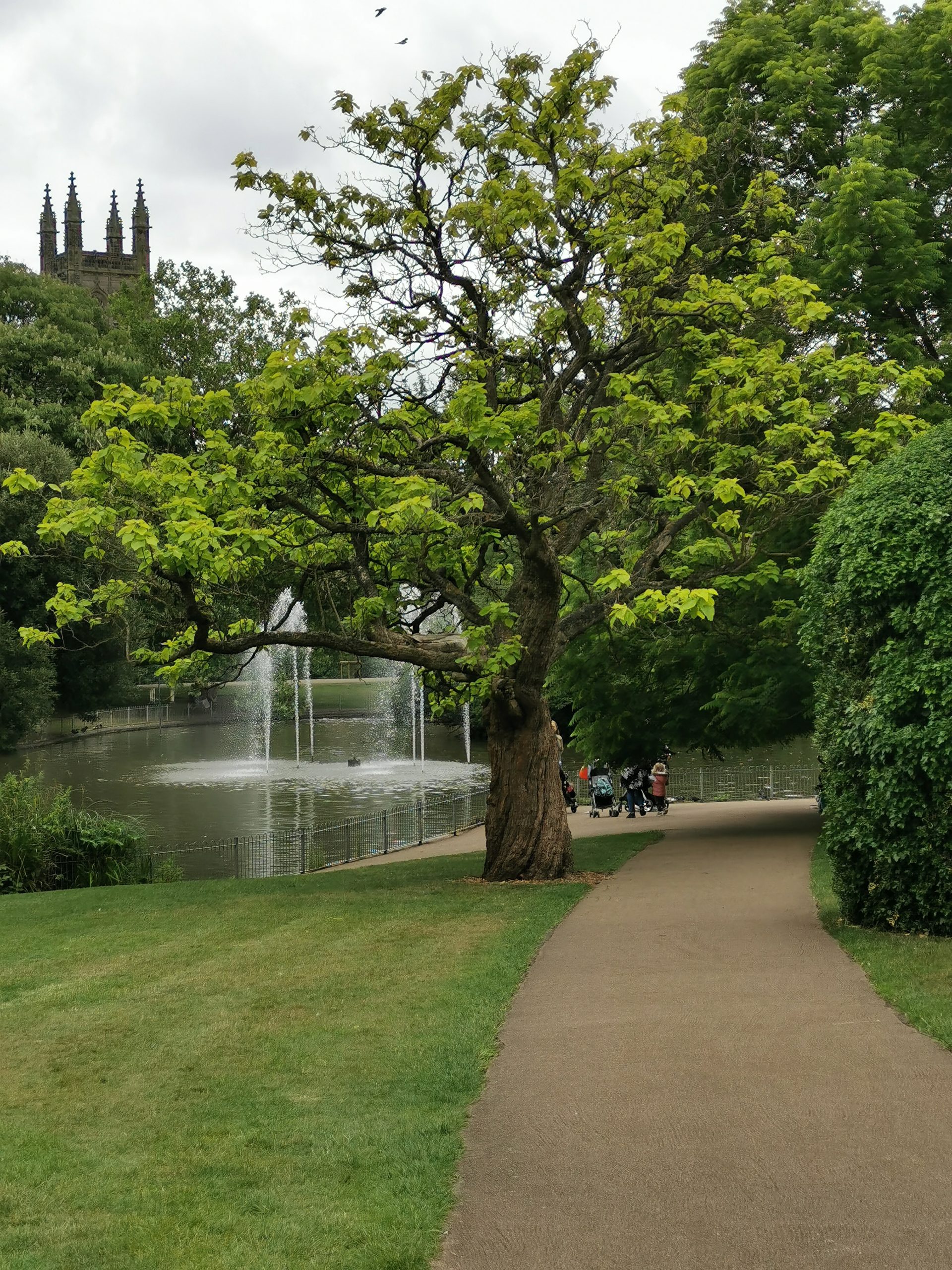


A pretty medium sized deciduous tree with large heart shaped golden leaves, which turn light green in summer. It has white delicate orchid-like flowers with orange and purple markings. It’s said to keep flies and gnats at bay. There are several in the Jephson Gardens.
he foliage and flowers are replaced at the end of the summer with long seed pods which remain on the tree into the winter. Catalpa bignonioides Aurea was introduced in the late 1870s, and it does best in a sheltered position as exposure to wind can damage the large, fleshy leaves and performs well on most soil.
Medicinal and folklore uses include a tea made from the bark which was used as an antiseptic, and antidote to snake bites, a laxative, sedative and vermifuge, and also as a substitute for quinine in treating malaria. It also has a slight narcotic action. It has been used with other herbs as a treatment for whooping cough and asthma. Poultices have been made with the leaves for external wounds and abrasions. The pods have sedative qualities and as well as having cardioactive properties have been distilled for use with other herbs in eye lotions for the treatment of trachoma and conjunctivitis. (Do NOT try at home)
Himalayan birch – betula utilis


There are several varieties of birch in the gardens including ones with cut leaves, and weeping ones. They are native throughout the UK and usually grow well in most conditions, but are short lived. The Himalayan birch pictured above has slightly less white bark than other birches but has an attractive compact form and lovely peeling bark. The bark on the lower part of this tree is black with diamond shaped fissures, and rugged where the bark has shredded and gone. Although the twigs look smooth they have small dark warts which makes them feel rough.
In good conditions this deciduous tree can reach 30 metres. The leaves are a light green, and are small and triangular-shaped with a toothed edge; they fade to yellow in autumn.
“Silver birch is monoecious, meaning both male and female flowers (catkins) are found on the same tree, from April to May. The flowers appear from April to May. Male catkins are long and yellow-brown in colour, and hang in groups of two to four at the tips of shoots, like lambs’ tails. Female catkins are smaller, short, bright green and erect. After successful pollination (by wind), female catkins thicken and change colour to a dark crimson. Masses of tiny seeds are borne in autumn and dispersed by the wind.” (Woodland Trust)
It’s said that birch can help to ease acne. (The leaves are diuretic and antiseptic, and an effective remedy for cystitis and other urinary tract infections. They were also used to dissolve kidney stones and relieve rheumatism and gout. The sap as wine or cordial similarly prevents kidney and bladder stones and treats rheumatism).
Being such an ancient tree it’s hardly surprising that there’s a lot of mythology and folklore surrounding it. It is a marker for new beginnings eg leaving childhood for life as an adult, and babies cradles were often made from birch. Symbolically, it has been used as a living maypole and is associated with fertility. The name birch is thought to come from the Sanskrit word bhurga meaning a ‘tree whose bark is used to write upon’. In mythology the Silver Birch takes a female form – it’s ancient name is Graceful Lady of the Woods. It appears fragile and delicate but it is extremely hardy and supposedly shows great strength can come from apparent weakness. Oh, and of course, fairies are supposed to live under it.
As there are so many beautiful trees in the Jephson Gardens, we’ve decided to dedicate a whole page to each tree and they can be accessed by clicking the text below.